

Introduction
In the first part of this blog series, Judith and Tom describe why strategy in care only works if you give direction and leave space. Frameworked freedom makes professionals know where the organisation wants to go, while keeping the space to contribute from their own expertise. But a clear course alone is not enough. The real question is: how do you make sure that strategy also lives in the organisation?
It doesn't happen with a presentation or a document. It happens when teams talk about what the course means for their daily work. When leaders give room for initiative. And when professionals experience that their knowledge and experience matter.
In this second part, Judith and Tom show how you organise this movement in a concrete way. How do you translate strategy into the practice of teams? And what role does leadership play in creating space, trust and dialogue?
Bringing the strategy to the workplace
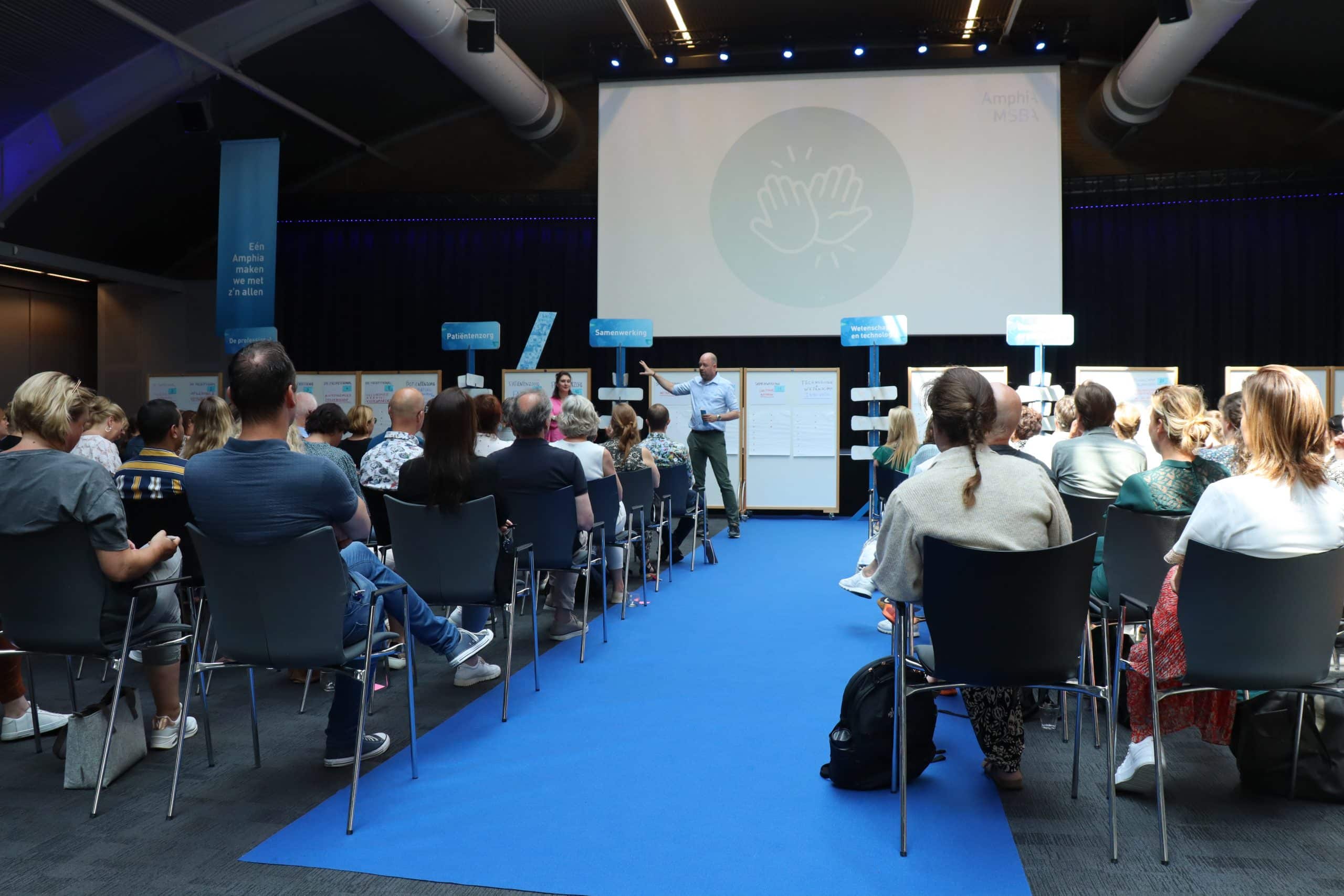
One way we make this concrete in organisations is by working with strategy and change boxes. No thick documents or long presentations, but a physical box with work forms, questions and materials that help teams translate the strategy into their own practice. Teams talk to each other, share experiences and decide together what the course means for their daily work. Key messages are established, but the content is created on the workplace.
Leadership as facilitator, not as captain
This requires a different type of leadership than we used to be. We move away from managerial leadership to a facilitating role. In a complex care environment, a leader simply cannot know everything; the professionals on the workplace have the in-depth knowledge.
Tom uses the metaphor of a submarine. He refers to an American captain who deliberately stopped giving orders. "He cannot know everything about what is happening on board. He has his people for that." Instead of sending everything himself, he made sure that his team got the space and responsibility to make decisions. That is exactly the role of leadership here: not to determine everything, but to set the right conditions and ensure that dialogue between departments and disciplines continues to work. This works, according to Judith, only if you are consistent: "If you say you are laying down responsibility somewhere and you are going to interfere with it, then you lose confidence."
The paradox of the doctor and the board
In the hospital world, you see a specific challenge in the direction: the paradox between the medical staff and the board of directors. On the one hand, it is about organising good and accessible care for the region. On the other hand, it calls for close cooperation with other care partners to bring care closer to people.
"Then such a governance stands between two worlds." On the one hand, the choices within the hospital, on the other hand, the task of serving society as well as possible as a whole of health care organisations.
A successful strategy brings these worlds together. Ownership only arises when medical professionals understand how the course contributes to better cooperation in the region and ultimately to better care for patients.
Man in the equation
In particular, in the care sector, the human side is invaluable to the success of a change of course. Judith stresses that technology and control pressure create the risk of the heart disappearing from care, whereas that is what it is all about: you do it for man.
When employees feel that a change 'comes over' them without being accompanied, resistance arises. "If you take the human out of the process, what do you do it for?" A powerful strategy therefore requires leaders who remain in touch with their people's passion.
Create time for the dialogue
A frequently heard argument in the care is: "We have no time." There is no time either. More and more needs to be done in ever less time. But that is precisely why it is essential to have time to create for dialogue.
You have to make the most of time by really letting people talk about the dilemmas. Only by facilitating that dialogue, you're making the strategy load and people feel heard.
Conclusion: A shared heartbeat
Realising a care strategy is not a one-off exercise, but a continuous process of alignment. As we say in Groupmapping, you cannot separate strategy from leadership, culture and the changeable line. Everything is connected.
By offering the right frameworks, speaking the language of the workplace and encouraging leaders to facilitate rather than conduct, we are making an abstract plan a shared reality. It is about the organisation's 'heartbeat', the people who are at bed every day or support the patient, synchronising with the course of the organisation. Because together we can only meet the challenges of the future!
Ready to turn strategy into a joint process?
Contact us and find out how to use the thinking power of your entire organisation.
Sharper, faster, smarter: I want that too!
Contact us to explore the possibilities together.