Bart Roestenberg:
For over 20 years, I have guided organisations on strategic issues, from industry to central government. Time and again, I experience how the right question makes all the difference: a question that is not only asked, but actually examined. From my role as partner at GroupMapping, I facilitate groups to get to the heart of complex challenges. Want to know more? Feel free to get in touch.
Questions excite the mind, stimulate the imagination and are the trigger for new insights. Especially at a time when we mostly consume information instead of really engaging with each other, asking the right question is more important than ever.
As Albert Einstein already said: “Asking the right question is often more important than finding the right answer.” But then what is that right question?
At GroupMapping, we design workshops to help organisations make thoughtful decisions and create support for those decisions. The key? Formulating sharp, relevant and sincere questions.
At the beginning of each project, we work with a core group from the organisation. We define:
The objectives, so that it is clear where stakeholders are investing their time and energy.
The questions we need to explore, test and answer together.
The different perspectives from which we can approach these questions.
For example: if the goal is to grow the organisation, you can look at the market, internal capabilities, competition or partners. Each perspective provides a different answer to the same question and enriches the conversation.
A strong question can lead to several valuable outcomes. Consider:
In preparing for a workshop, we check with the client organisation whether we have the right questions on the table. At the same time, we critically check whether the core group's questions are really open-ended or whether the desired answer is already passed between the lines.
Because the latter happens more often than you think.
People have a keen sense of whether a question is sincere. Think of that party where someone asks a question, but in the meantime is already looking around for a more interesting conversation. Or a colleague who asks you “Do you have solar panels on your roof yet?”, only to then deliver a monologue about his own solar panel adventure.
This also occurs in organisations. “We also need to get Hans on board, let's ask him what he thinks.” But Hans' answer doesn't actually matter. That is not only unfair, it is downright demotivating. Then don't ask Hans.
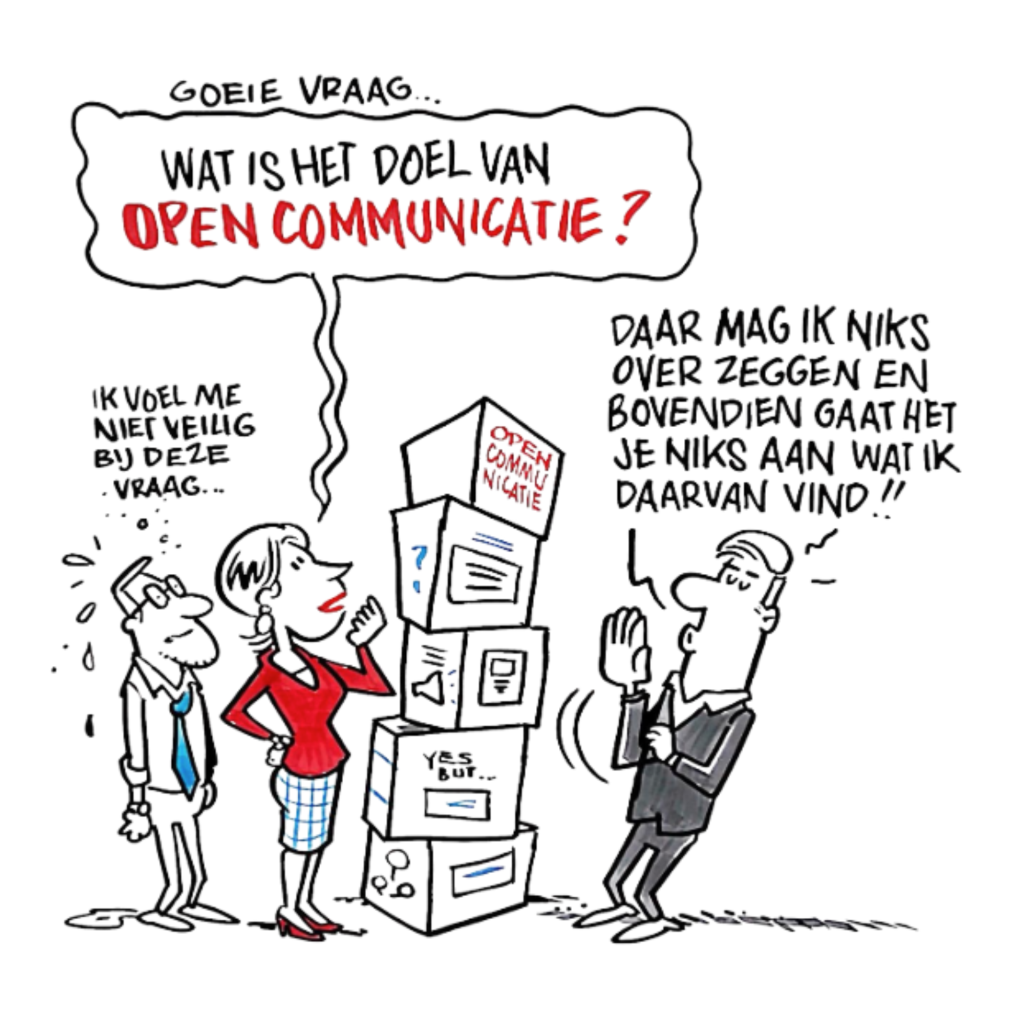
A real question is one:
Where the answer counts as a building block for the decision,
Where genuine curiosity is behind it,
And where the answer is heard, weighed and taken into account.
Such questions set a group in motion. They make people curious and willing to contribute to the end result. That creates ownership, motivation and sustainable realisation of plans.
You notice that your answer matters when:
It will be taken seriously and come back in the sequel,
There is active listening, not to react, but to understand.
Listening is not waiting until you can speak for yourself. It is looking for the value in the other person's response. And: what can we do with that?
That is when dialogue becomes creative, insights arise and answers come to life.
GroupMapping is all about creative dialogue. We build insight, engagement and movement together. From different perspectives, we search for meaningful answers to real questions.
The result? A group motivated to work together on decisions that are supported and implemented. That is the essence of the GroupMapping method.